The Coffee Talk I Didn't Know I Needed to Have

If you've been around here for more than five minutes, you know I don't do anything in my wellness routine just because it's trendy. I research it, I question it, I usually annoy my husband by reading him a study at 9pm — and then, only then, do I let it earn a permanent spot in my life.
Coffee earned its spot a long time ago. It's the one non-negotiable in my morning — before the kids are up, before the inbox, before I've decided whether today is a "regulated" day or a "white-knuckle it" day. But over the past year I went down a research rabbit hole on coffee that genuinely changed how I buy it, and I wanted to bring you with me.
First, the good news: coffee is actually really good for you
I know we've all absorbed some version of "coffee is a vice" from diet culture. The research tells a different story.
A 2024 review in Ageing Research Reviews — looking across dozens of long-term cohort studies — found that moderate, habitual coffee drinkers (roughly 2-4 cups a day) had meaningfully lower all-cause mortality and an estimated boost in healthspan of almost two years compared to non-drinkers. Multiple large studies echo this: consistent coffee intake has been linked to lower rates of cardiovascular disease, type 2 diabetes, and cognitive decline, with researchers pointing to coffee's polyphenols and chlorogenic acids as the likely drivers — these compounds appear to lower inflammation and oxidative stress, which are two of the biggest accelerators of aging we know of.
There's even a 2025 study in BMJ Mental Health that found people who drank 3-4 cups of coffee daily had longer telomeres (the protective caps on our DNA that shorten as we age) compared to lighter drinkers. Longer telomeres are generally associated with slower cellular aging.
So no — your coffee habit is not the problem. I want to say that loudly for the moms in the back who feel guilty about their second cup.
But here's the part that surprised me: the mold question is real, just more nuanced than the headlines
You've probably heard some version of "regular coffee is full of mold toxins." This claim gets thrown around a lot in the biohacking space, and like any good researcher-mom, I wanted to know if it was actually true or just clever marketing.
The honest answer: it's somewhere in the middle.
Coffee beans absolutely can carry mycotoxins — compounds produced by certain molds, most notably one called ochratoxin A (OTA). A 2025 mycological study of green coffee beans found OTA present in over two-thirds of samples tested, and earlier research has found contamination rates as high as 50-90% depending on growing and processing conditions. OTA itself isn't nothing to shrug off — it's classified as a possible carcinogen, it's been linked to kidney damage in regions with high dietary exposure, and it can suppress immune function at high enough doses.
The reassuring part: roasting destroys a significant portion of OTA, and most regulated markets (the EU, for instance) cap allowable OTA levels in roasted and instant coffee, with most commercially tested coffee falling under that limit. One 2022 risk-assessment study did flag instant coffee specifically as carrying a higher relative risk than classic brewed or roasted coffee. So this isn't a "coffee is poison" situation — but it's also not nothing, especially if you're drinking multiple cups a day, every day, for years, the way most of us coffee-loving moms do.
That's the gray area I sat in for a while. The studies didn't tell me coffee was dangerous. They told me that sourcing matters more than I'd been giving it credit for — and that "lab-tested for mold" isn't just a marketing buzzword, it's addressing something that's measurably, if inconsistently, present in regular coffee beans.
Why I switched to Danger Coffee
This is the part where I tell you what I actually did with all this research, because I don't love giving you a pile of studies and leaving you to sort it out alone.
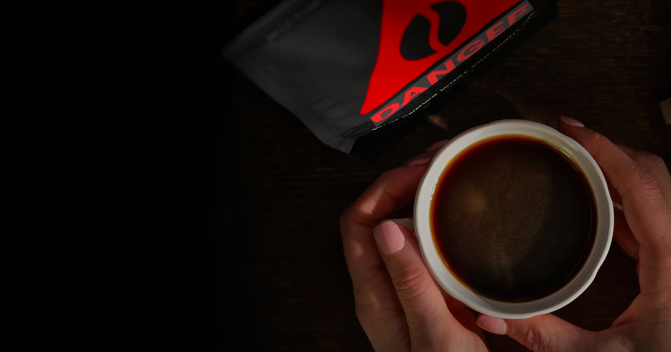
I switched to Danger Coffee by Dave Asprey — yes, the "father of biohacking" himself, the guy behind the original Bulletproof Coffee movement. Danger Coffee is third-party lab tested at multiple stages for mold and mycotoxins, the beans are farm-direct, and it's remineralized with over 50 trace minerals through a humic and fulvic acid process — which, if you know me, you know I'm a sucker for anything that gets more minerals into my very depleted, very tired mom body without another supplement to remember.
It's not a magic fix, and I'm not going to tell you regular coffee is going to hurt you tomorrow. But for something I drink every single day, sourcing it from a company that's actually testing for the thing the research flags as a real (if often overstated) concern felt like an easy, low-effort upgrade. My energy has felt cleaner, less jittery, and the taste is genuinely good — rich, a little earthy from the minerals, no bitterness.
The interview that sealed the deal for me
Before I ever bought a bag of Danger Coffee, I sat down with Dave Asprey himself for an episode of Motherhood Unstressed. If you've listened to the show for a while, you know I don't bring guests on just because they have a product to sell. I brought Dave on because the conversation we had about biohacking, longevity, and biological autonomy is genuinely one of the most important ones I've recorded.
Dave is an entrepreneur, two-time bestselling author, and the host of The Human Upgrade: Biohacking for Longevity & Performance — and his entire mission is getting people to reclaim control over their own bodies for long, vibrant health. We talked about what that actually looks like in practice, and how to protect and advocate for your family's health in a world that doesn't always make that easy.
A few things he said that I haven't stopped thinking about since:
"40% of aging is immune dysfunction and overactivity."
"The coercive tactics that are in place right now to make people do things they don't want to do means you cannot pursue a longevity strategy."
"It is your right to choose your medical treatment."
That last one in particular hit close to home for me — it's the same thread that ran through my TEDx talk on protective selfishness. Advocating for your own body, and your kids' bodies, isn't extra or indulgent. It's the baseline. Dave's whole career is built on that same idea, just applied to longevity and biohacking instead of motherhood — which is probably why the conversation flowed the way it did.
If you want the full episode, it's worth the listen front to back.
The bottom line
Coffee is good for you. The research on that is honestly more solid than most of what we worry about in wellness culture. But like everything I bring into my home and my body, I'd rather know what's actually in my cup than assume — and once I knew, switching felt like the obvious next step.
If you've been on the fence about your own coffee, I hope this gave you what I always try to give you here: the actual research, not just the vibes.
Drink up, mama. You've earned it.
— Liz
Disclosure: This post contains an affiliate link. If you purchase through it, I may earn a small commission at no extra cost to you. I only recommend products I personally use and believe in.